

Categories: Small Business Marketing, Small Business Growth, Tips & Resources
You're staring at your marketing budget spreadsheet again. Every month, money goes out for tools, ads, and services: but the results? They're scattered, inconsistent, and honestly? Pretty disappointing.
Sound familiar? You're not alone. Most small business owners are throwing money at marketing like darts in the dark, hoping something sticks. But here's the thing: it's not about spending more money. It's about spending smarter.
The Budget Reality That Nobody Talks About
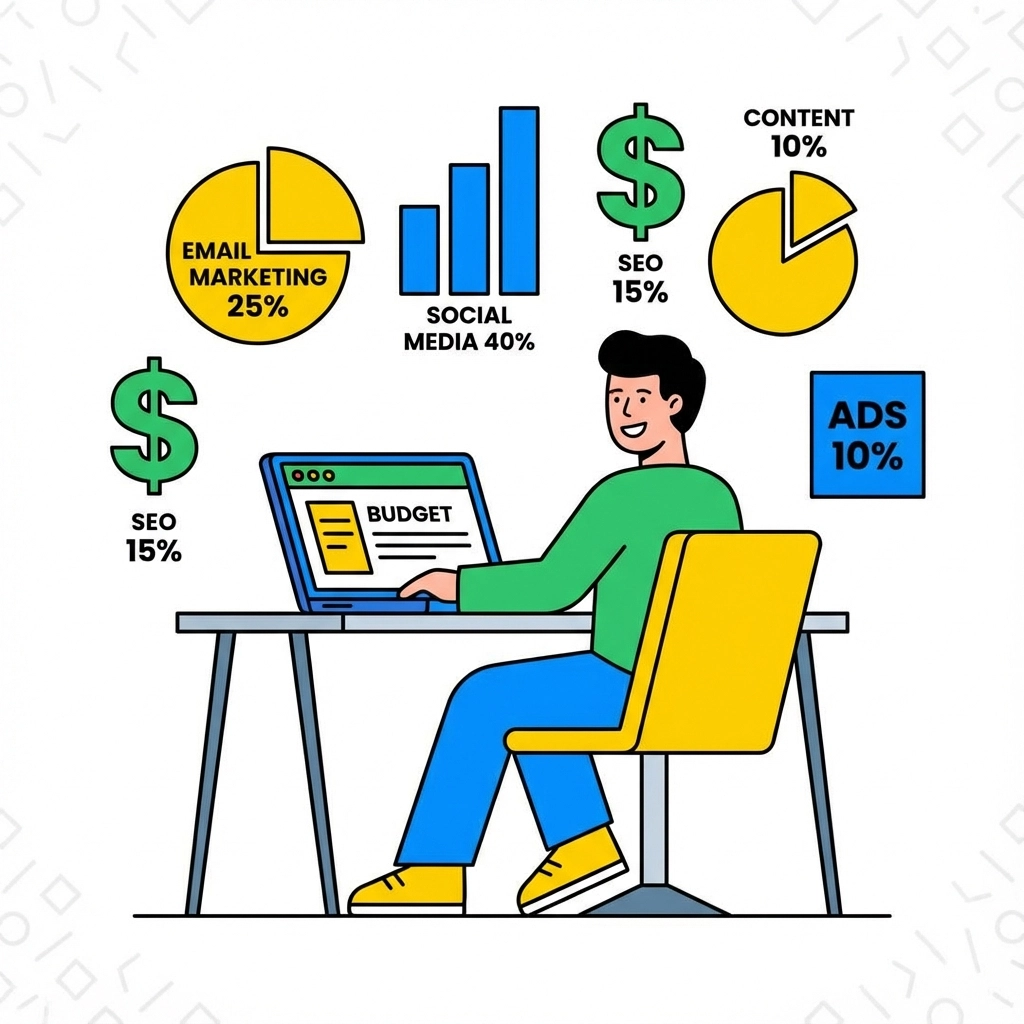
Let's get real for a second. The research shows that 48% of small businesses spending 6-10% of their budget on marketing actually see success. Compare that to the measly 11% who spend less than 5% and wonder why nothing's working.
But here's what's really happening: those successful businesses aren't just spending more: they're making strategic choices about where that money goes.
Most small businesses should allocate 7-10% of gross revenue to marketing. If you're pulling in $500,000 annually, that's $35,000-$50,000 in marketing spend. Sounds like a lot? It's actually the sweet spot where real growth happens.
The All-in-One Solution Promise (And Why Most Fall Short)
Everyone's selling you the "all-in-one" dream. One platform, one login, all your marketing problems solved. But most of these solutions are just fancy Swiss Army knives: they do a lot of things, but none of them particularly well.
Here's what actually matters when evaluating these platforms:
Does it actually integrate, or just claim to? Some "all-in-one" solutions are really just separate tools stuck together with digital duct tape. Your data gets trapped in silos, your campaigns don't talk to each other, and you end up with more headaches than solutions.
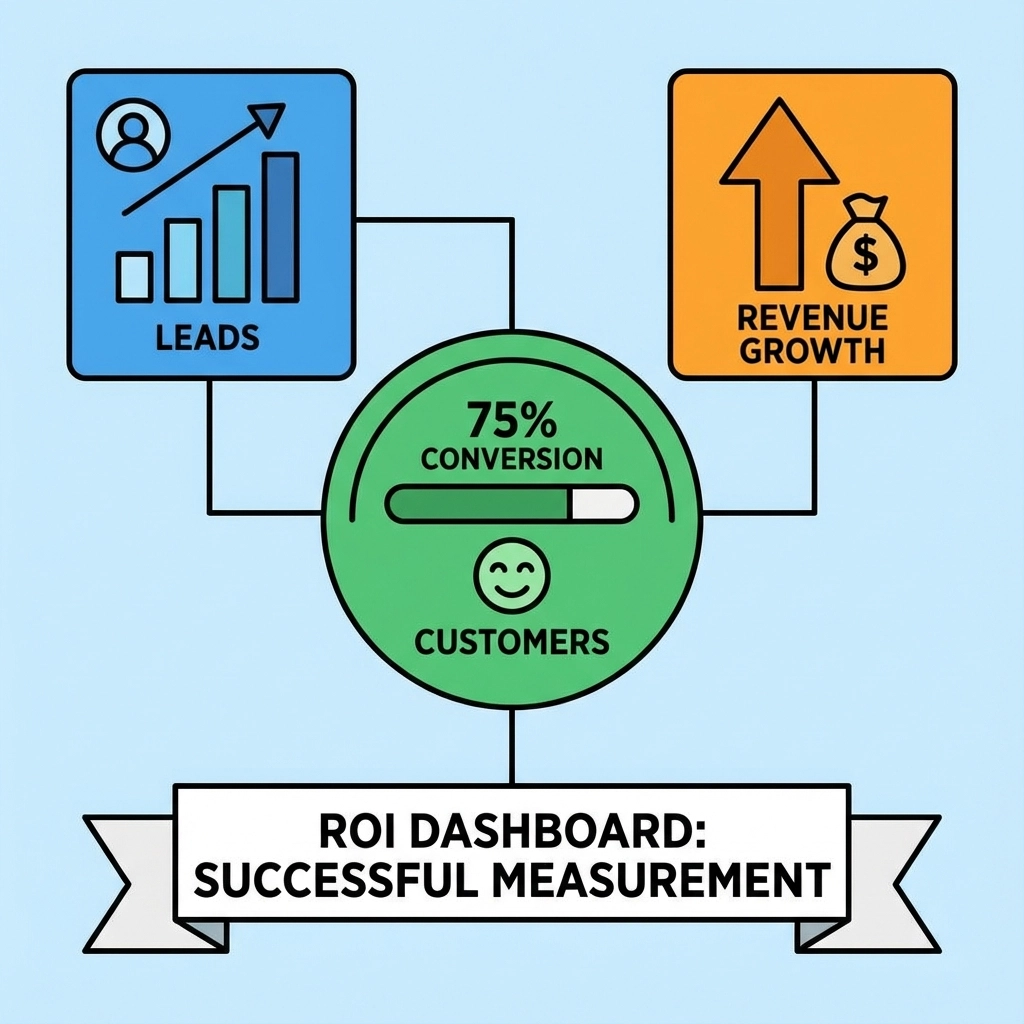
Can you see real ROI quickly? If you can't track where your leads are coming from and what's converting within 30 days, the platform isn't worth your time. Period.
Is it built for your business size? Enterprise solutions scaled down are clunky. Consumer tools scaled up are flimsy. You need something designed specifically for small businesses that are ready to grow.
The Money Wasters: What NOT to Do
Before we talk about what works, let's address what's draining your budget:
Spreading yourself too thin. Using 15 different tools because each one "does this one thing really well" is a recipe for chaos. Your team spends more time switching between platforms than actually marketing.
Paying for features you'll never use. That enterprise-level CRM with 47 different dashboard views? You're using maybe 3 of those features. Stop paying for complexity you don't need.
Ignoring the learning curve costs. Every new tool requires training time. Every platform switch means lost momentum. Factor these hidden costs into your decisions.

How to Actually Measure Marketing ROI (Beyond Vanity Metrics)
Forget follower counts and email open rates for a minute. Here's what actually predicts business growth:
Cost per qualified lead. Not just any lead: qualified ones that actually turn into customers. If your cost per qualified lead is trending down while volume increases, you're winning.
Customer lifetime value growth. Are your marketing efforts attracting better customers who stick around longer and buy more? This is where bundled marketing approaches often outperform piecemeal strategies.
Speed to result. How quickly can you launch campaigns, see data, and adjust? In small business marketing, agility beats perfection every time.
Attribution accuracy. Can you actually tell which marketing activities led to which sales? If you can't connect the dots, you're flying blind.
Why Bundled Services Actually Work Better
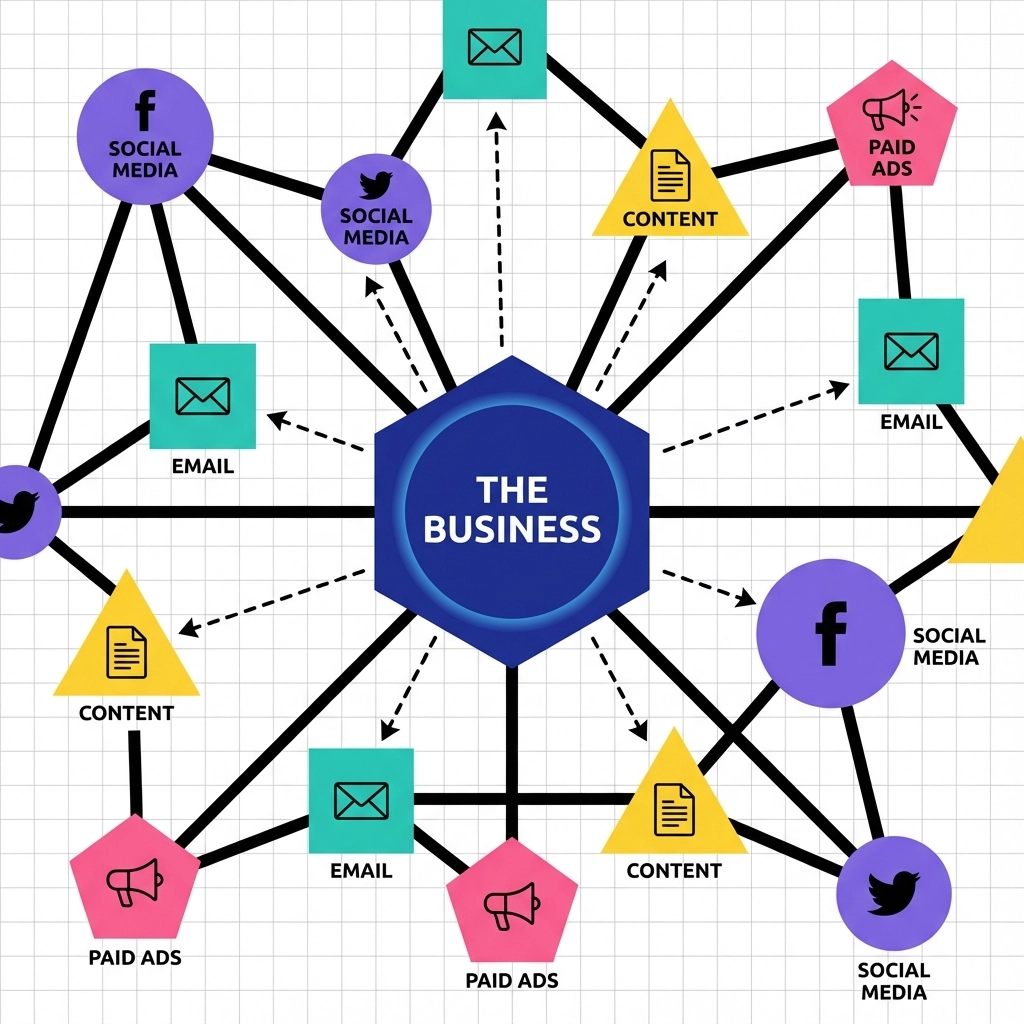
Here's something most marketing platforms won't tell you: the magic happens in the connections between different marketing activities, not in the individual tactics themselves.
When your website, social media, email campaigns, and advertising all work together: sharing data, reinforcing messages, and creating cohesive customer experiences: that's when you see exponential results instead of linear ones.
Think about it: a potential customer sees your Facebook ad, visits your website, signs up for your email list, and gets retargeted with a personalized offer. Each touchpoint builds on the last one. But if these systems don't talk to each other? You're essentially running four separate campaigns that happen to mention the same business name.
The AI Advantage That's Actually Real (Not Hype)
Let's cut through the AI marketing noise for a second. Most "AI-powered" marketing tools are just algorithms with better branding. But there are real AI advantages that can transform your marketing ROI:
Predictive optimization. AI that actually learns from your specific audience and automatically adjusts campaigns for better performance. Not generic best practices: your best practices.
Content personalization at scale. Creating hundreds of variations of ads, emails, and website experiences that feel personally crafted. This isn't about changing "Dear [First Name]": it's about fundamentally different messages for different audience segments.
Timing intelligence. AI that figures out when your specific audience is most likely to engage, buy, or convert. Generic "best times to post" advice is worthless compared to AI-powered timing specific to your customers.
The Smart Money Choice: What Actually Works
After analyzing hundreds of small business marketing budgets and results, here's what the successful ones have in common:
They invest in systems that grow with them, not tools they'll outgrow in six months. They prioritize platforms that make their existing team more effective rather than requiring them to become marketing experts overnight.
They focus on solutions that combine multiple marketing functions seamlessly: not just technically, but strategically. Their brand messaging stays consistent whether someone encounters them on social media, through email, or on their website.
Most importantly, they work with providers who understand that small business marketing isn't just scaled-down enterprise marketing. It's its own discipline with unique challenges, opportunities, and success metrics.
Making the Decision: Questions to Ask Before You Buy
Before you commit to any all-in-one marketing solution, get answers to these non-negotiable questions:
Can I see results within 60 days? If the platform requires a six-month "learning period" before you see meaningful data, look elsewhere.
What happens to my data if I leave? You should own your customer data, campaign history, and performance metrics. Full stop.
How does this actually save me time? If you're spending more time managing the platform than it saves you, it's not the right fit.
What does support actually look like? When things go wrong: and they will: can you actually talk to a human who understands your business?
The Bottom Line: Investment vs. Expense
Here's the real difference between marketing that works and marketing that wastes money: investment thinking vs. expense thinking.
Expenses are costs you try to minimize. Investments are costs that generate returns. The most successful small businesses treat their marketing as an investment in a system that compounds over time.
When you choose an all-in-one marketing solution, you're not just buying software. You're investing in your business's ability to consistently attract, convert, and retain customers. The platforms that understand this: and build accordingly: are the ones that deliver real ROI.
At 360 Viewbox, we've seen too many small businesses burn through marketing budgets on solutions that promise everything but deliver complexity. That's why we built our approach around bundled services that actually work together, powered by AI that learns from your specific business, not generic industry averages.
Your marketing budget should be working as hard as you are. Make sure you're investing it in solutions that grow your business, not just grow your monthly expenses.